
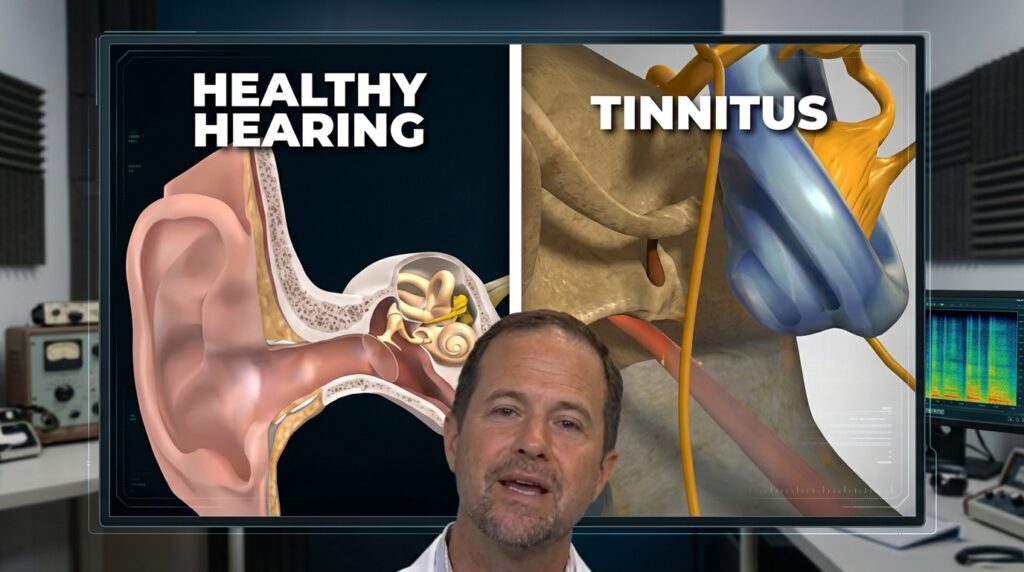
Tinnitus is often described as a problem that starts in the ears — a constant ringing, buzzing, hissing, or whistling that seems to have no obvious source. But what if the way the brain processes sound is part of the story?
The presentation behind this topic explores a different way of looking at tinnitus: the communication pathway connecting the inner ear with the brain. According to the presentation, a tiny neural connection helps carry sound information toward the brain, where those signals are interpreted.
When that communication doesn’t work normally, the brain may receive distorted or confusing signals. The result can be the familiar sounds that many people experience even when the surrounding environment is completely quiet.
That raises a more interesting question: if tinnitus involves the way sound signals are being communicated, could the answer involve something beyond simply treating the ears?
The Connection Between Hearing and the Brain
One of the more intriguing ideas explored in the presentation is that hearing isn’t simply about what happens inside the ear.
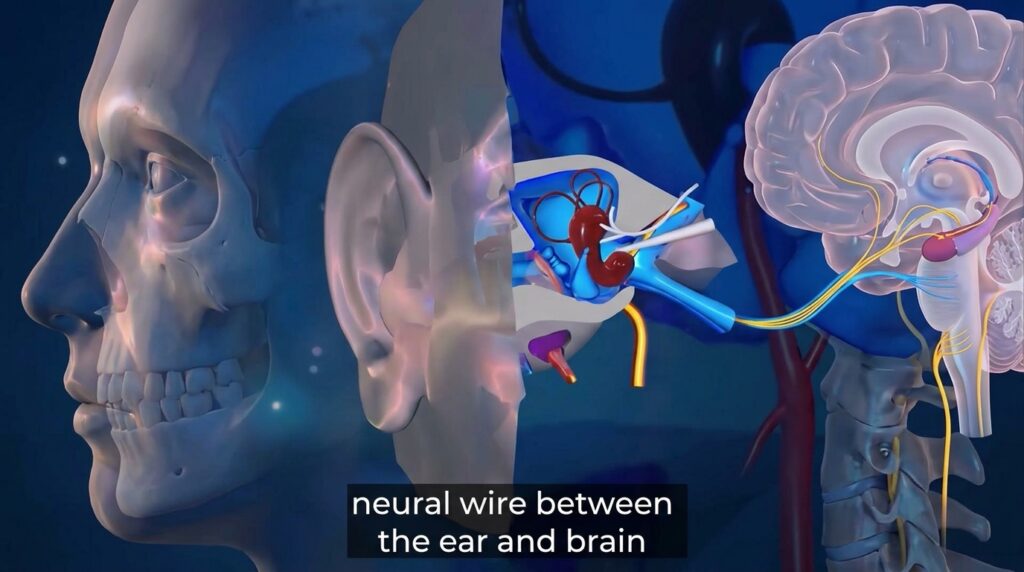
The VSL describes the auditory pathway as a communication system: sound enters the ear, is converted into electrical signals, and travels toward the brain where those signals are interpreted. It compares the neural connection to a tiny communication wire.
The presentation then asks what could happen when that connection becomes damaged or misfires — and whether this could help explain why someone can hear ringing or other sounds even when there is no external sound producing them.
Where the Full Presentation Takes the Story
The presentation goes deeper into:
- Why the VSL argues that tinnitus may involve communication between the ear and brain
- The “neural junction” concept and its proposed role in sound processing
- A research discovery that changed the presenter’s understanding of where tinnitus may originate
- The story of a family member whose tinnitus and hearing difficulties became part of the search for an answer
- The approach the presenter eventually developed after investigating this proposed mechanism
The complete explanation goes considerably further into the proposed approach, including how the presenter says it was developed and why it may differ from approaches discussed earlier in the presentation.
A Closer Look at the “Mute Button” Idea
The interesting part isn’t simply the ringing itself. It’s the possibility that understanding how the brain receives and interprets sound signals could change the way the problem is approached.
The full presentation takes this idea much further and explains the proposed connection, the research story behind it, and the approach that follows from that theory.
Explore the full presentation to hear how the explanation unfolds.