
If you’ve been dealing with persistent ringing, buzzing, or high-pitched sound, it’s easy to assume the problem starts and ends inside your ears.
However, recent educational insights suggest that auditory signals travel along a complex pathway directly to your brain. When those signals become scrambled—like a frayed or faulty wire—the result is continuous sound disruption that can impact your focus, sleep, and everyday comfort.
Understanding how your brain processes these auditory pathways is the first step toward reclaiming peaceful silence.
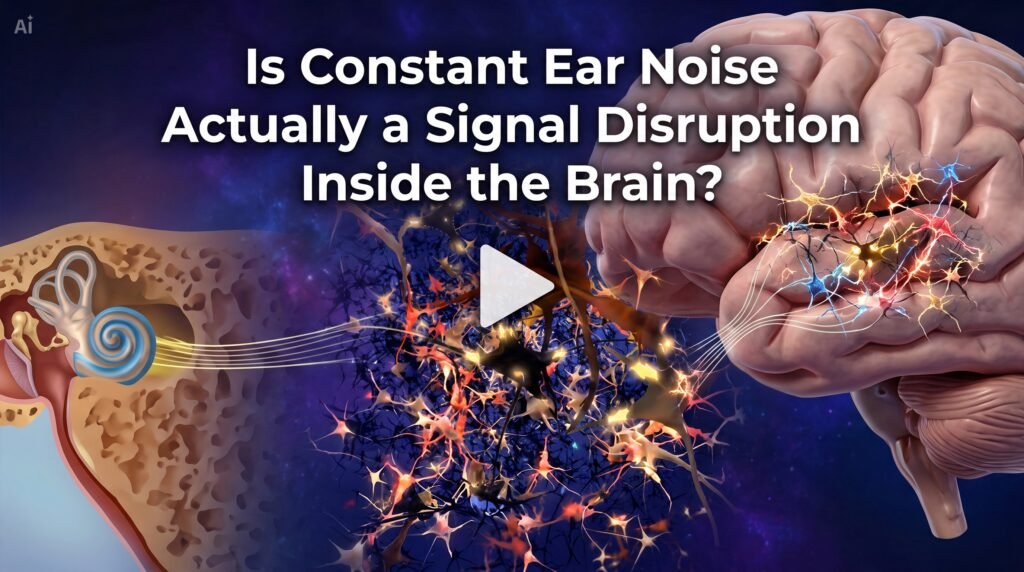
Understanding the mechanics of sound processing gives you the power to take control of your well-being. Before you dive into the comprehensive presentation below, take a moment to explore how neural signals impact your overall lifestyle.
- Uncover the “Scrambled Wire” Effect: Discover why erratic nerve signals send constant false alerts to your brain, creating buzzing or whistling even in quiet rooms.
- Protect Your Everyday Mental Energy: Learn how quiet surroundings can help clear away afternoon brain fog, sudden headaches, and late-night insomnia caused by non-stop sound.
- Support Long-Term Cognitive Health: Gain valuable insight into keeping your neural pathways calm, clear, and steady as you age.
- Reclaim Peaceful Moments: Imagine enjoying quiet mornings, reading comfortably, and getting uninterrupted sleep without background distraction.
Additional Resources & Background Research
Is Constant Ear Noise Actually a Signal Disruption Inside the Brain?
For centuries, the frustrating experience of persistent internal ringing, buzzing, or whistling—collectively known as tinnitus—was treated almost exclusively as a localized ear issue. Physicians focused on the mechanical components of hearing: the eardrum, the delicate bones of the middle ear, and the fluid-filled cochlea. However, modern neuroscience and medical history reveal a far more complex reality. Mounting evidence suggests that persistent auditory noise is often not an isolated mechanical failure within the ear itself, but rather a profound signal disruption occurring along the neural pathways that connect the auditory nerve directly to the brain.
Historical Perspectives: From Mechanical Pathology to Neural Mapping
Throughout ancient and classical medical history, persistent phantom sounds were viewed through varied lenses. Ancient Egyptian papyri referred to “bewitched ears,” treating the condition with local botanical oils poured directly into the ear canal. By the 19th century, European otologists classified tinnitus strictly as a mechanical failure—hypothesizing that damaged hair cells or structural blockages in the ear canal were solely responsible for creating phantom noise.
It was not until the late 20th century, with the advent of functional neuroimaging and electrophysiology, that medical researchers realized surgical sectioning of the auditory nerve frequently failed to stop the ringing. This unexpected clinical observation forced a monumental shift in auditory science: if severing the physical nerve connecting the ear to the brain did not end the sound, the source of the noise had migrated into the central nervous system itself. Researchers began recognizing that the brain’s auditory cortex, when deprived of proper peripheral input, generates its own autonomous sensory activity.
The Neural Circuitry of Sound: Frayed Signals and Auditory Hyperactivity
To understand why phantom sounds occur, one must look at how electrical impulses travel between the inner ear and the auditory cortex. Under normal conditions, microscopic hair cells in the cochlea convert fluid vibrations into electrical signals. These impulses travel along the auditory nerve to the brainstem and up to the brain’s processing centers, where they are decoded into recognizable sounds such as speech or music.
When auditory nerve fibers experience physical strain, metabolic distress, or age-related degeneration, their signal transmission becomes compromised—much like a damaged electrical wire carrying an unstable current. In response to this diminished or erratic input, the brain attempts to compensate through a mechanism known as central gain compensation.
When incoming audio signals drop or become scrambled, the auditory cortex turns up its internal “volume knob” to detect missing information. This neural hyperactivity creates a continuous loop of phantom sound:
- Signal Corruption: Frayed or firing-impaired nerve pathways send chaotic baseline signals.
- Central Amplification: The brain’s thalamus—the sensory gateway—fails to filter out these erratic background impulses.
- Cortical Fixation: The auditory cortex interprets this internal electrical feedback as continuous, real sound (ringing, buzzing, or hissing).
The Ripple Effect: How Auditory Signal Disruption Drains Cognitive Health
The consequences of unmanaged neural signal disruption extend far beyond mild annoyance. Because the auditory pathway is deeply intertwined with the limbic system (the brain’s emotional center) and the reticular activating system (which controls arousal and attention), continuous phantom noise acts as a perpetual stressor on the central nervous system.
When the brain continuously processes scrambled auditory input, it allocates significant cognitive bandwidth just to cope with the sensory overload. Over time, this systemic strain manifests in several key ways:
- Cognitive Fatigue & Brain Fog: The continuous processing demands drain executive function, making focus and memory recall increasingly difficult.
- Sleep Architecture Fragmentation: Neural hyperactivity prevents the brain from transitioning smoothly into deep, restorative slow-wave sleep cycles.
- Autonomic System Strain: The persistent internal signal triggers a mild, continuous “fight-or-flight” sympathetic nervous response, elevating daily stress hormones.
Given these far-reaching effects, treating auditory noise solely as a localized inconvenience ignores the urgent necessity of maintaining long-term neurological stability and cognitive health.
Holistic Strategies for Nurturing Neural and Auditory Health
While severe neurological conditions require comprehensive clinical evaluation, alternative wellness research highlights several foundational strategies aimed at supporting nerve integrity and calming hyperactive auditory pathways:
1. Sensory Rest and Acoustic Calisthenics
Exposing the ears to constant high-decibel environments accelerates auditory nerve strain. Conversely, total silence can cause the brain to turn its internal gain up even higher. Introducing gentle, broadband ambient sound (such as low-frequency ocean waves or soft natural noise) provides the auditory cortex with neutral input, helping to quiet central hyperactivity.
2. Supporting Microvascular and Cellular Health
The auditory nerve and cochlear structures rely on a dense network of microcapillaries for oxygen and nutrient delivery. Lifestyle practices that promote healthy circulation—such as regular aerobic movement, maintaining healthy blood pressure, and avoiding environmental toxins—help protect sensitive neural tissue from oxidative stress.
3. Modulating Stress and Nervous System Tone
Because stress directly increases central nervous system excitability, dampening sympathetic nervous system arousal is critical. Practices that encourage vagus nerve stimulation—including deep diaphragmatic breathing, biofeedback, and structured relaxation—can help calm overactive sensory pathways and lower the emotional salience of phantom sounds.
Understanding persistent ear noise as a manifestation of neural signal disruption changes the narrative from helplessness to proactive management. By prioritizing systemic nerve health, acoustic care, and stress modulation, individuals can take meaningful steps toward supporting both auditory comfort and long-term brain vitality.