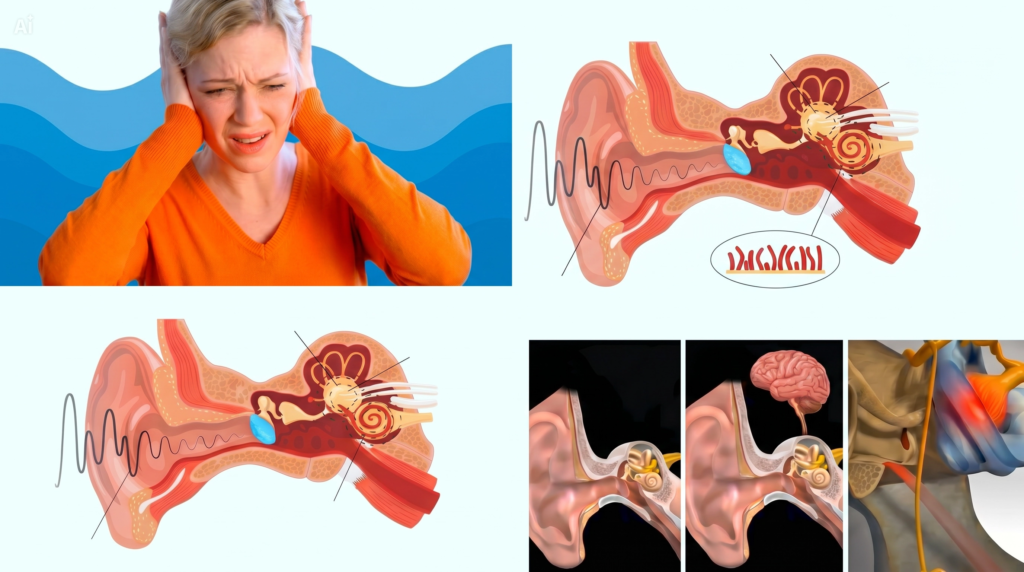
Mainstream medicine treats your ears like isolated islands, offering temporary patches that never solve the core issue. They are dead wrong. Inside the brief presentation below, a groundbreaking medical discovery reveals the real, systemic source of the screaming in your head—and why waiting to address it is a massive gamble.
- The “Ear Disorder” Illusion: Why treating tinnitus as a simple hearing issue is a dead end, and how a bizarre genetic secret found in a remote species of Serbian bats holds the key to where the phantom noise actually begins.
- The ISL1 Gene Shield: The microscopic truth behind why some people possess a natural genetic armor against ringing, and how activating this sleeping pathway protects the delicate “cochlear cells” in your head.
- The 500% Cognitive Threat: The alarming, scientifically documented link between untreated auditory distress and severe memory loss—and why ignoring the buzzing today drastically elevates your long-term risk of brain degradation.
- The Scrambled Signal Trap: How aged and damaged hair cells start sending chaotic, corrupted frequencies to your brain, creating a continuous “mental prison” of screeching that gets worse the longer it goes unaddressed.
- Access the full breakdown by playing the video above, or skip straight to the core formula and ingredient checklist by clicking the link immediately below.
Additional Resources & Background Research
The Silent Brain Threat: The Real Cause Behind the Ringing in Your Ears and the 5x Dementia Risk Traditional Medicine Ignores
For decades, millions of people suffering from tinnitus have been given the same dismissive diagnosis: “It is just a localized ear issue. Learn to live with it.” Modern clinical evidence and historical biological studies reveal a far deeper, more systemic truth.
The constant buzzing, hissing, or screeching in your ears is not actually originating in your ear canal. Rather, it is a phantom signal generated by an overworked, struggling brain. By treating tinnitus as a localized auditory problem, traditional medicine completely ignores a much larger threat—the direct connection between chronic auditory distress and a significantly elevated risk of cognitive decline.
The Auditory Pathway: Why ringing is a neurological event, not just an ear problem.. Source: open.lib.umn.edu
The Historical Misunderstanding of the “Ringing” Phenomenon
Historically, humanity has struggled to understand phantom sounds. Ancient Egyptian papyri from 1500 BCE describe “the singing ear” as a physical block, attempting to treat it with localized herbal oils and physical extractions. During the Renaissance, physicians believed that trapped air behind the eardrum vibrated constantly, resulting in the perceived noise.
It was not until the late 20th century, with the advent of functional brain imaging, that medical historians and researchers recognized a profound error in these assumptions.
Tinnitus is not a mechanical failure of the outer ear. It is a neurological compensation mechanism. When the microscopic, delicate hair cells of the inner ear—known as cochlear cells—begin to degrade due to aging, environmental toxins, or physical stress, they stop translating external sound waves into clear electrical signals.
Faced with a sudden “silence” from these damaged receptors, the brain’s auditory cortex attempts to compensate. It turns up its internal volume, much like static hiss on a radio when there is no station tuned in. The noise you hear is actually your brain’s neural network firing frantically in a desperate attempt to find a signal that is no longer there.
How Damaged Auditory Signals Create a “Mental Prison”
To understand why this is a systemic threat, we have to look closely at the microscopic pathways connecting the inner ear directly to the brainstem and the cerebrum.
Cochlear Hair Cells: When these micro-receptors degrade, they trigger a cascade of chaotic signals to the brain.. Source: ResearchGate
Under a microscope, healthy cochlear cells look like neat rows of upright, microscopic hairs. These hairs wave in response to fluid vibrations inside the inner ear, releasing chemical neurotransmitters that travel along the cochlear nerve.
When these delicate cells are structurally compromised, the signals they send become “scrambled” and corrupt. Instead of a clean stream of data, the brain receives a chaotic mess of electrical impulses.
This triggers a devastating loop:
- Misinterpretation: The brain fails to decode the corrupted sound signals properly.
- Stress Cascade: The constant processing failure places immense stress on the central nervous system.
- Hyper-Activation: The brain remains in a constant state of high alert, pouring resources into interpreting a non-existent threat.
This sustained state of neurological distress acts like a taxing background program on a computer, slowly draining the brain’s cognitive resources day and night.
The Auditory-Dementia Connection: The 5x Greater Risk
While living with constant noise is a heavy emotional burden, the long-term cognitive consequences are far more alarming. Large-scale epidemiological studies have uncovered a striking correlation: individuals experiencing severe auditory decline and untreated tinnitus face up to a five times higher risk of developing cognitive decline, including dementia and Alzheimer’s disease, compared to those with healthy hearing.
There are two primary physiological reasons for this direct connection:
1. Cognitive Overload and Resource Depletion
The human brain has a finite amount of processing power. When a significant portion of your brain’s daily energy is permanently dedicated to managing, filtering, and fighting off constant, screeching static, other critical networks suffer. Over time, the constant cognitive overload starves the parts of the brain responsible for short-term memory, logic, and spatial reasoning.
2. Auditory Cortical Atrophy
In neurology, the rule is “use it or lose it.” When the brain stops receiving rich, complex auditory data from the cochlear cells, the auditory cortex begins to degrade and shrink. This atrophy does not remain isolated. Like a domino effect, the physical degradation spreads to adjacent brain structures, including the hippocampus—the primary seat of memory formation and emotional regulation.
Reclaiming Cognitive Balance: The Path to Self-Sufficiency
Traditional medicine often resorts to masking devices, cognitive behavioral therapy, or invasive sound therapies that only address the symptom, not the underlying biological breakdown.
True preventative wellness focuses on cellular preservation and systemic support:
- Cellular Protection: Supporting the body’s natural ability to preserve the remaining cochlear hair cells before they degrade completely.
- Neurological Calming: Supporting the brain’s ability to regulate overexcited neural pathways, helping to naturally “turn down” the internal volume.
- Environmental Shielding: Actively protecting the ears from further micro-trauma, minimizing the daily toxic load that triggers oxidative stress in the inner ear.
Recognizing that ear ringing is an early warning sign of neural exhaustion is the first step. By addressing the root biological cause rather than masking the noise, we can take control of our auditory health and safeguard our most precious asset: our cognitive longevity.
Want to know more about the specific natural compounds that support cochlear cell health?Yes