
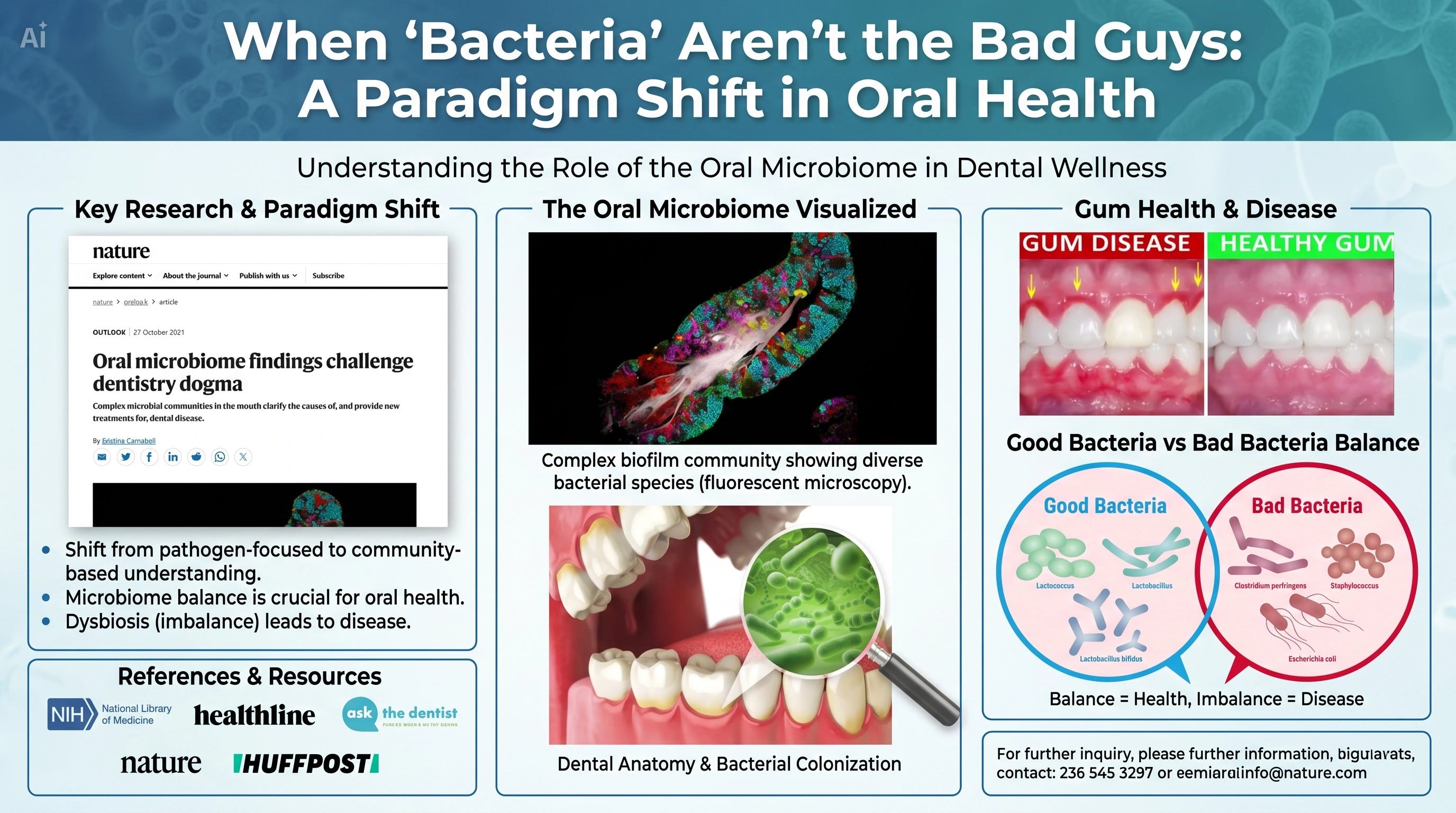
In the world of dental care, we’ve been conditioned to believe that “bacteria = the enemy.” We rinse with harsh, stinging mouthwashes, brush aggressively, and do everything in our power to maintain a sterile environment.
But have you ever wondered why—despite following every rule and buying every “germ-killing” product—issues like gum sensitivity, persistent bad breath, or cavities still find a way back?
The answer might not lie in how well we eliminate bacteria, but in how many “good bacteria” we have left.
Germ Theory vs. Terrain Theory: The Internal Battle
As highlighted in the video above, there is a fascinating tug-of-war between two primary scientific philosophies regarding our health:
Germ Theory: This suggests that specific bad germs are the sole cause of disease, leading us to focus entirely on eradication.
Terrain Theory: This argues that if the “environment” (the terrain) of the mouth is balanced and healthy, the microbes that naturally live there won’t cause illness. The body’s natural defenses manage the rest.
Even the Journal of the American Dental Association (JADA) has noted that in cases of periodontal issues, it isn’t just one “bad” germ at fault. Instead, it’s about the strength of the good bacterial community. When that community is weakened, the “terrain” becomes vulnerable to attack.
The Garden Analogy: Why Balance Trumps Sterility
Think of your mouth as a garden.
If you spray heavy-duty weed killer that kills everything (similar to using harsh chemical rinses), you’re left with dead soil. When a new weed (bad bacteria) drifts in, it has no competition and takes over instantly.
However, if your garden is filled with lush, healthy grass and plants (good probiotics), those weeds simply don’t have the space or nutrients to take root.
Having a diverse population of beneficial bacteria creates a natural shield. These “good cops” help nourish your gums, protect your enamel, and maintain order in a way that chemicals simply can’t replicate.
Moving Toward a Balanced Ecosystem
Understanding the oral microbiome is the first step toward true dental resilience. The next step is identifying the specific natural elements that can help repopulate and support these beneficial microbes.
To dive deeper into the science of these natural ingredients and see how they contribute to a healthy oral “terrain,” you can review the technical breakdown and research summaries on the detailed information page below.