
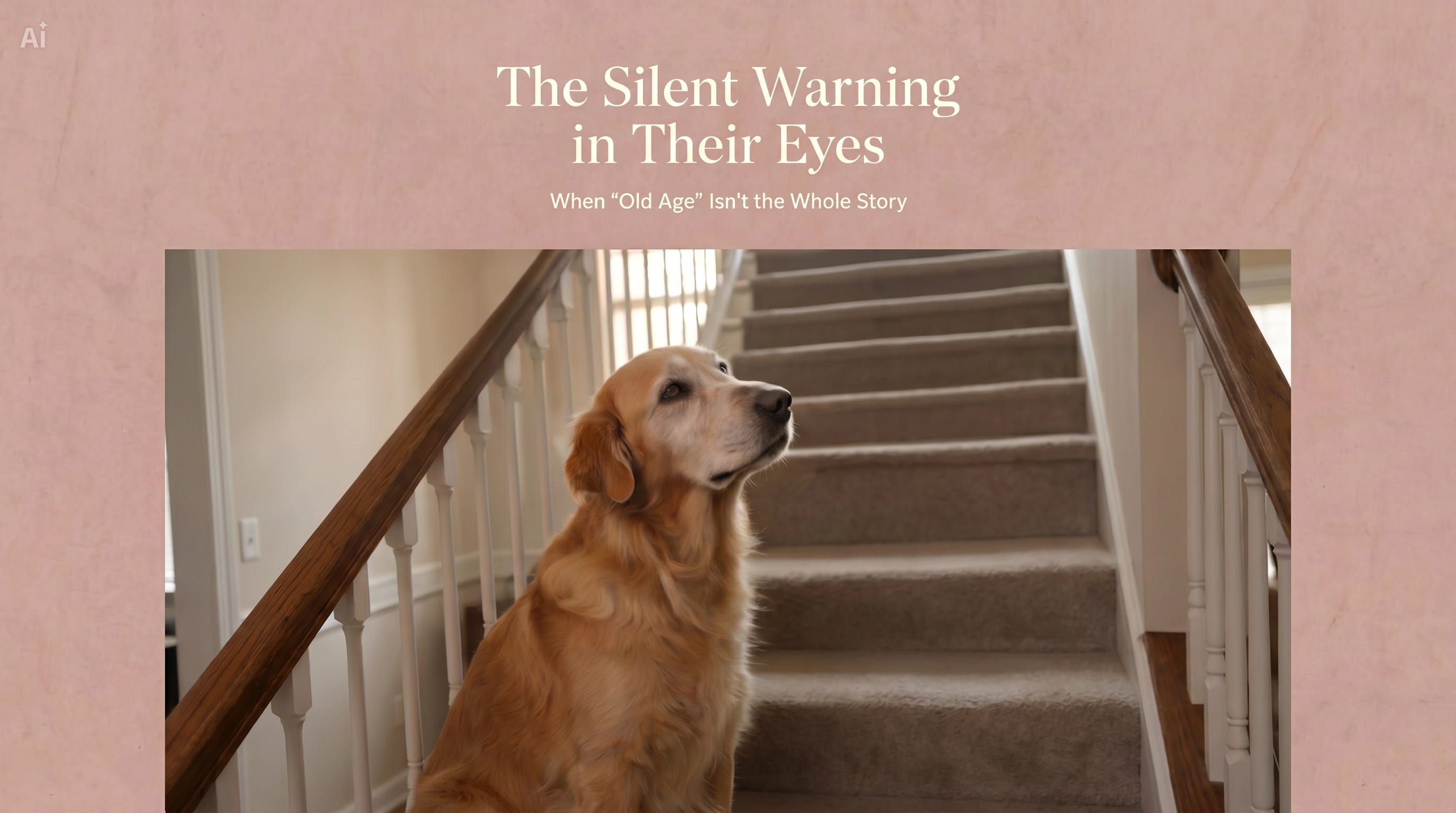
As dog lovers, we all share a common mental scrapbooked image: the frantic tail wag every morning, the boundless sprint toward a tennis ball, and that unmistakable, mischievous glint in their eyes. But as the years pass, many of us notice subtle shifts that make our hearts sink.
The dog who once greeted you at the stairs is now sleeping through your arrival. Their coat, once glossy and soft, feels coarse and dull. Even a short walk around the block seems like a chore they’d rather skip. We often comfort ourselves with the same phrase: “It’s just a normal part of getting older.”
But what if “old age” isn’t the real culprit?
Max’s Story: The Signs We Often Miss
John Goodwin, a father from Denver, noticed this shift in his Golden Retriever, Max. At just six years old—the prime of a Golden’s life—Max began to fade. He started sleeping all day, his eyes became cloudy, and he developed a worrying habit of vomiting shortly after meals.
John tried everything. He bought the most expensive “boutique” kibble available, and his wife spent hours home-cooking meals with human-grade ingredients. They spent more on Max’s dinner than their own, yet Max only got worse. His tail wags became half-hearted, and the spark in his eyes was replaced by a look of confusion and fatigue.
A clip showing a dog’s transition from lethargy to vitality, or an educational breakdown of internal canine health signals.
Red Flags You Should Never Ignore
If your companion is exhibiting these behaviors, it may not be a simple lack of energy. It’s often a “silent cry” from an internal system that is struggling to stay balanced:
Digestive Distress: Constant grass-eating, frequent vomiting, or “accidents” in the house despite being house-trained.
Skin and Coat Issues: Persistent itching, gnawing at skin, or licking paws until they are raw.
Anxiety and Mood Shifts: Becoming suddenly fearful, less playful, or withdrawing from the family.
Mobility Struggles: Giving up on stairs or surrendering to fatigue just a block into a walk.
Paul from Kansas experienced this with his French Bulldog. After years of being told “it’s just age,” he discovered that addressing the internal root cause allowed his dog to run at the park again, returning to his old, happy self.
True canine health isn’t always about the price tag on the bag of food; it’s about the specific biological building blocks that support their system from the inside out.
Next Steps for Your Best Friend
If you want to dive deeper into the specific nutritional profile and the science-backed components that help restore a dog’s internal vitality, you can view the full breakdown of the essential ingredients and their benefits here: