The Hidden "Invisible Leak" in Your Bathroom Cabinet (And Why Your Bladder Isn't the Real Problem)

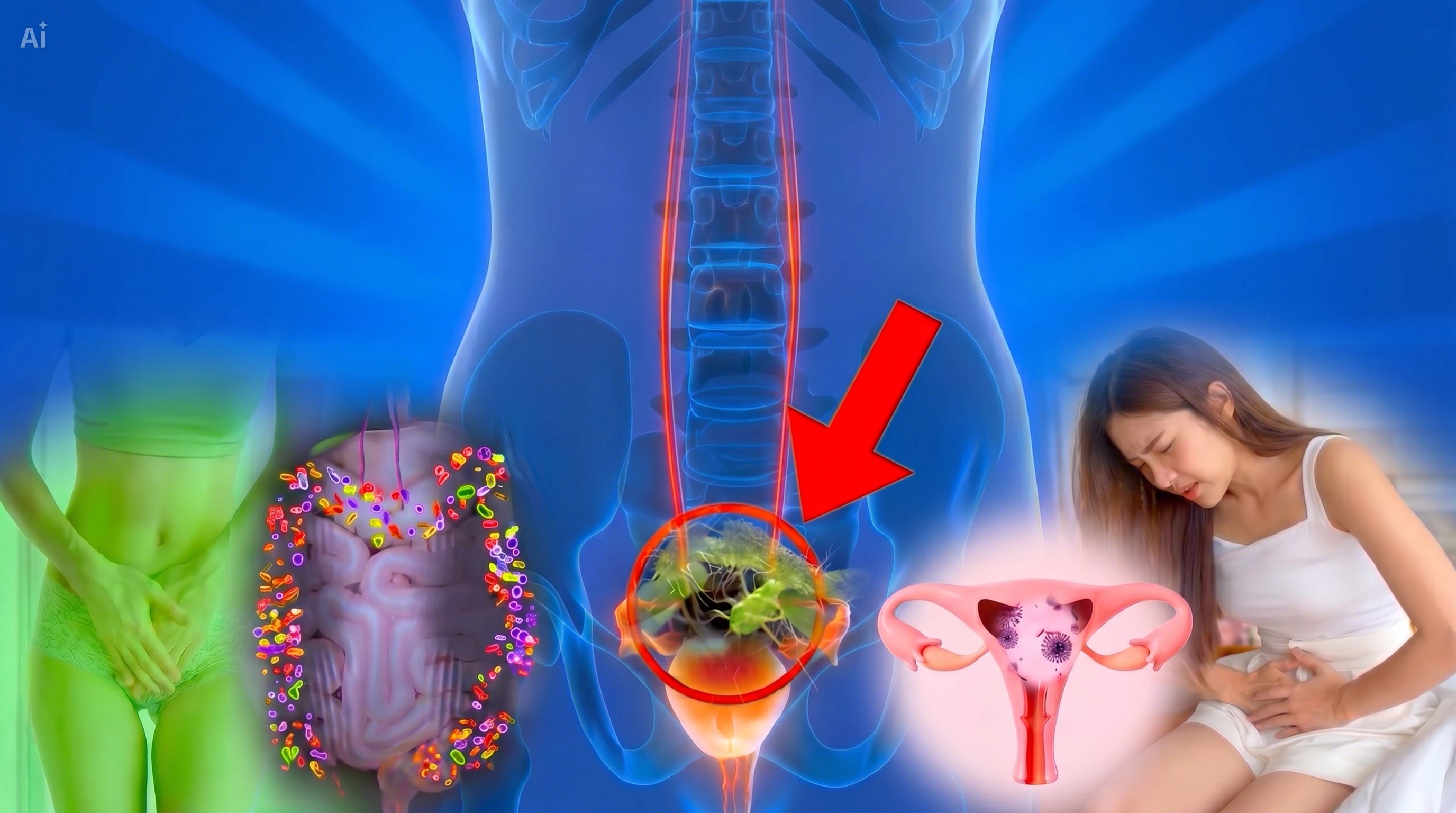
If you’ve ever found yourself making a mental map of every public restroom before you even leave the house—or if you’ve mastered the “cross-your-legs-and-pray” technique every time you sneeze—I want you to take a deep breath.
You aren’t alone, and more importantly, you aren’t “broken.”
For years, the standard advice for bladder issues has been a broken record: “It’s just aging,” “It’s your pelvic floor muscles,” or “Try doing more Kegels.” But for millions of women, the exercises don’t work, and the “leak-proof” underwear feels like a surrender rather than a solution.
The question is: Why isn’t the standard advice working?
It turns out we’ve been looking at the wrong map. New research from top-tier institutions like Harvard, Duke, and Loyola is revealing that the “urinary urge” isn’t just about muscle strength—it’s about a delicate, hidden ecosystem that lives inside you.
The Silent Sabotage: Your “Urinary Microbiome”
We all know about gut health and the “good bacteria” in our stomach. But science has discovered that your urinary tract and vaginal canal have their own “biotype” or ecosystem. When this environment is balanced, your bladder stays calm and your muscles behave.
But when this ecosystem is disrupted, something called “Urinary Dysbiosis” occurs.
Bad bacteria move in, creating a low-level, chronic irritation that keeps your bladder muscles in a state of constant “spasm.” It’s like having a tiny, invisible alarm clock inside you that keeps going off, telling your brain you need to go—even when your bladder is nearly empty. This is why you feel that sudden, uncontrollable urge.
The Diet Soda Litmus Test
Do you notice that your symptoms flare up after a Diet Coke or a specific snack? It’s not just the caffeine. It’s the way these artificial ingredients shift the pH of your internal ecosystem, feeding the bad bacteria and starving the good ones.
The “Safe” Products That Aren’t So Safe
Perhaps the most shocking discovery isn’t what we’re eating, but what we’re using. Many of the very products designed to “help” us—like traditional pads and tampons—are often treated with chemicals and bleaching agents like Dioxins.
Because these products are in contact with our most sensitive tissues for decades, these chemicals can act as “silent disruptors,” killing off the protective bacteria we need and leaving our bladders vulnerable to inflammation and leaks.
How to Reclaim Your Freedom
Stopping the leaks and the constant “bathroom anxiety” isn’t about doing 500 Kegels a day. It’s about restoring the balance of your internal ecosystem. When you fix the environment, the inflammation stops, the spasms cease, and you get your life back.
If you’re tired of the “oops” moments and want to see the breakthrough method that is helping women restore their bladder health at the source, there is a better way.