
Why Tinnitus May Involve More Than the Ear

That persistent ringing, buzzing, or whistling in the ears can affect far more than your ability to enjoy quiet moments. For some people, tinnitus makes it difficult to concentrate, relax, or get a good night’s sleep. When ordinary sounds become harder to hear clearly, conversations can also become frustrating and exhausting.
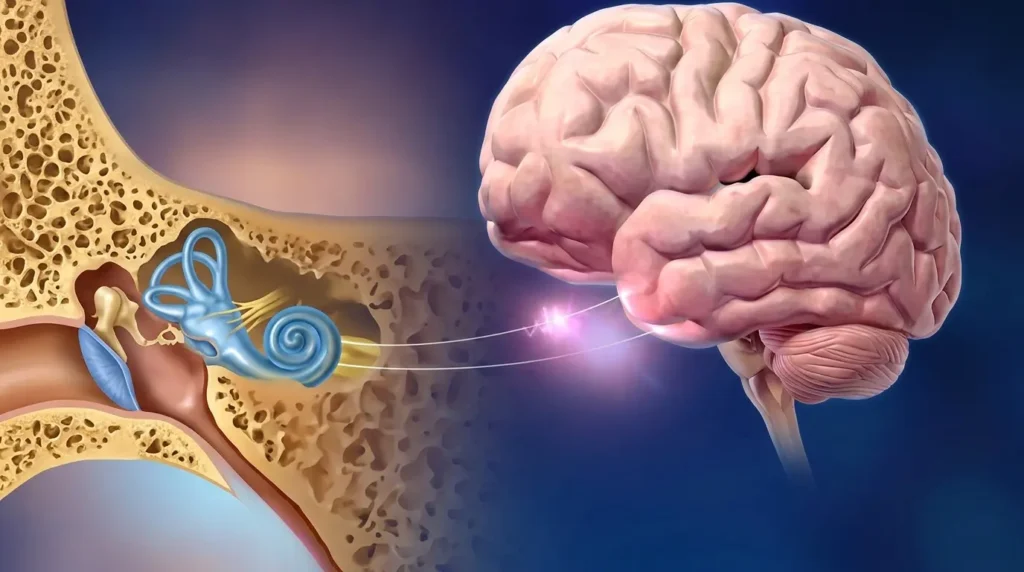
One interesting question is how the brain processes sound signals when someone experiences tinnitus. The ears collect sound, but the brain interprets those signals. The relationship between these two systems is an important part of understanding hearing and tinnitus.
The presentation explores a proposed explanation involving the neural connections between the inner ear and the brain. It uses the analogy of an electrical wire carrying signals: when communication becomes disrupted, the way sound is perceived may change. This is the central idea behind its “brain’s mute button” headline.
The Ear–Brain Connection
The presentation argues that focusing exclusively on the ear may overlook other aspects of how tinnitus is experienced. It uses this perspective to introduce a proposed approach centered on supporting the connection between the auditory system and the brain.
The explanation also draws on a story about an older woman experiencing persistent ringing and hearing difficulties, alongside a discussion of traditional Japanese miso and nutrients that the presenter says inspired a formula.
These are claims and explanations presented in the video, not proof that a particular supplement can cure tinnitus. The distinction matters when evaluating health-related promises.
What the Full Presentation Explores
The presenter goes further into:
- How the brain and auditory system work together to interpret sound.
- Why tinnitus can persist even when the source of the perceived sound is not obvious.
- The traditional Japanese food practices that inspired the proposed approach.
- The nutrients discussed in connection with hearing and brain health.
- The personal story used to explain how the presenter developed the proposed formula.
Explore the Full Explanation
The complete presentation provides more detail about the proposed neural-connection theory, the personal stories behind it, and the approach the presenter recommends.