For many women, reaching their 30s, 40s, 50s, and beyond brings an unexpected and deeply frustrating challenge: pee leaks and sudden, uncontrollable urges to rush to the bathroom. If you have ever felt fine one moment, only to experience an involuntary bladder contraction a second later, you know how disruptive this can be.
Many believe that bladder leaks are simply an inevitable sign of aging or a consequence of weakened pelvic floor muscles. However, groundbreaking medical research reveals that the real culprit isn’t necessarily a “broken” bladder—it often comes down to an imbalance in a hidden ecosystem called the urinary microbiome.
What is the Urinary Microbiome?
Most people are familiar with the gut microbiome, the complex ecosystem of bacteria living in the digestive tract that plays a crucial role in overall health. For a long time, standard medical wisdom assumed that the urinary tract was entirely sterile. However, modern scientific advancements have proven without a doubt that a whole universe of both good and bad bacteria lives inside your urinary tract, too.
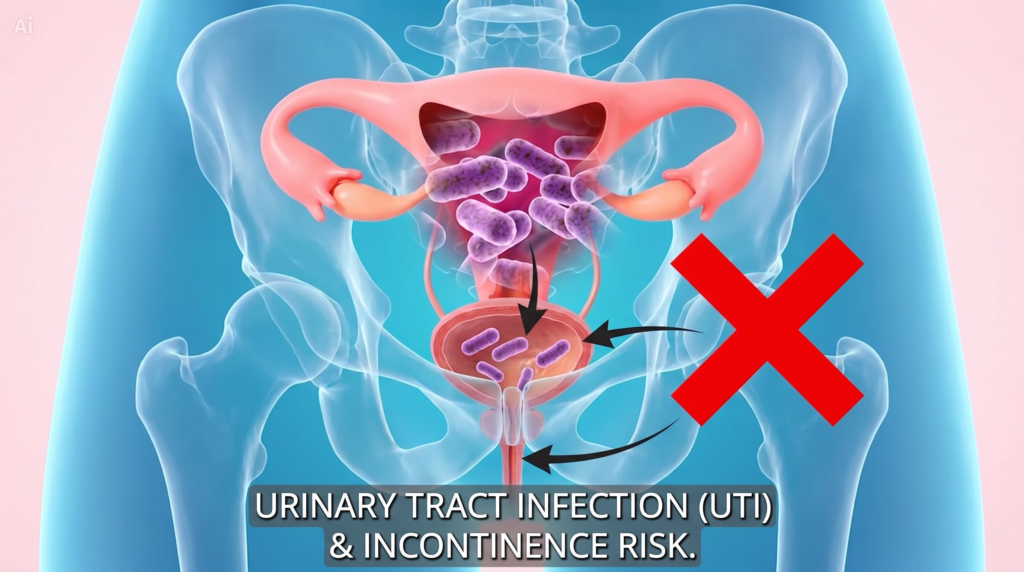
When your urinary microbiome is healthy, the good bacteria outnumber the bad. They protect the lining of your bladder and urinary tract, keeping everything functioning smoothly. But just like your gut, this delicate balance can get knocked offline. When the good bacteria begin to die off, opportunistic bad bacteria start to multiply, spread, and colonize these sensitive areas.
How Bacterial Imbalance Triggers Bladder Spasms
A major study from Harvard Medical School highlighted the direct association between an imbalanced urinary microbiome and urinary incontinence in women. Furthermore, research published by scientists at Duke University explored how variations in the urinary microbiome directly correlate with the severity of urinary incontinence symptoms.
When bad bacteria take over your urinary tract, they don’t just sit there—they irritate, pinch, and inflame the urothelium (the cellular lining of the bladder) and the key muscle that controls your bladder.
Think of it like a sudden tickle or a mosquito bite on your arm—your muscles automatically twitch in response.
Similarly, when bad bacteria irritate the bladder control muscle, it triggers involuntary spasms and contractions. The muscle squeezes when it shouldn’t, causing a sudden, overwhelming urge and making you lose control of your urine. This bacterial distress can also manifest as vaginal irritation, unusual discharge, or strange smells.
Why Standard Solutions Often Fail
Because the root cause is bacterial and structural inflammation, standard remedies often miss the mark:
- Kegel Exercises: While great for strengthening healthy muscles, Kegels cannot stop bad bacteria from irritating and inflaming the bladder lining. They don’t fix the underlying muscle spasms caused by infection or imbalance.
- Over-the-Counter Drugs: Many common medications designed for urinary incontinence focus strictly on calming nerve signals, but they do nothing to rebuild the population of good bacteria needed for a healthy urinary microbiome to thrive.
The “Diet Coke” Test
If you want real-world proof of how sensitive this ecosystem is, consider the impact of acidic drinks. Sipping a Diet Coke or another highly acidic beverage can temporarily lower your urinary pH. This sudden shift directly irritates the bladder lining and disrupts the local bacteria, frequently resulting in an immediate increase in bathroom trips over the next hour.
The Surprising Culprits Behind the Imbalance
What causes the good bacteria to die off in the first place? While hormonal shifts, antibiotics, perimenopause, and menopause all play significant roles, research points to another incredibly common culprit: traditional feminine hygiene products.
Many of the tampons, pads, and panty liners used by millions of women are processed with chemicals or contain trace amounts of dioxins (byproducts of the bleaching process). Because the vaginal and urinary tissues are highly permeable, constant exposure to these materials can disrupt the delicate local microbiome, paving the way for bad bacteria to take over.
Restoring Balance to Your Bladder
To truly address sudden urges and leaks, you must target the root cause: shifting the bacterial balance back in favor of your body’s natural defenses. To see the exact ingredients and the secret formula discovered by researchers to flush out bad bacteria and revitalize your urinary microbiome, visit the official page below.
Click Here to Discover the Secret Formula and Ingredients for Bladder Control