
Remember when climbing stairs, squatting, or moving throughout your day felt completely effortless?
If morning stiffness or popping knees are starting to slow you down, you’re not alone. While many dismiss these daily discomforts as just “getting older,” understanding what is happening inside your joints is the first step toward regaining your freedom and comfort.
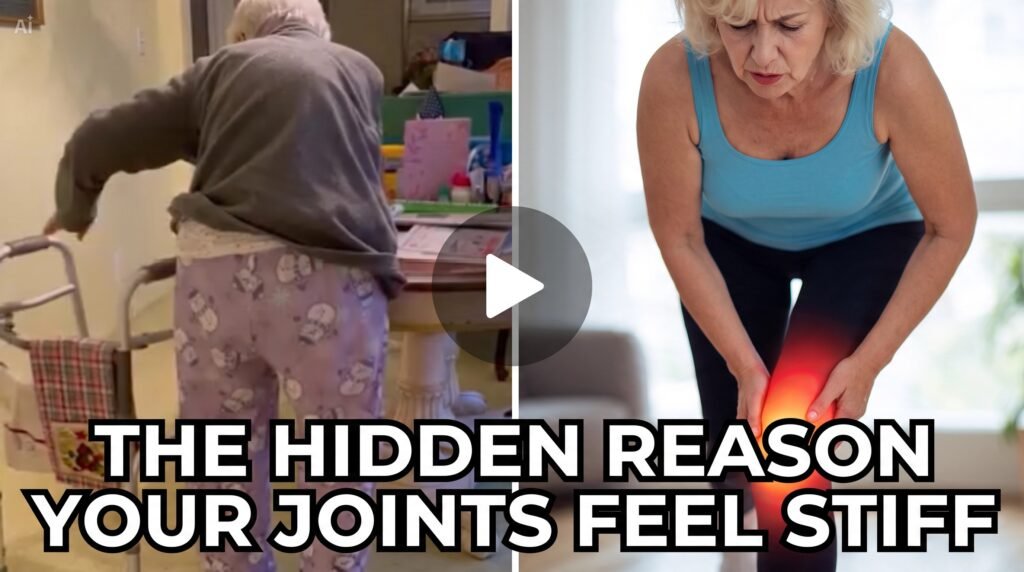
- Rediscover Daily Independence: Move through your routine—from carrying grocery bags to walking outdoors—without second-guessing every step or feeling held back by stiffness.
- Beyond “Normal Aging”: Uncover why standard advice often misses the root causes of physical wear and how targeted care can help you maintain active flexibility.
- Protect Your Long-Term Freedom: Learn simple, proactive measures you can start implementing today to support joint comfort and preserve your physical autonomy for years to come.
- A Fresh Perspective on Movement: Shift away from feeling limited and discover practical insights that foster renewed energy, confidence, and natural ease of motion.
Ready to take the next step toward better physical well-being? Watch the complete presentation below to learn more.
Additional Resources & Background Research
Reclaim Your Youthful Mobility: The Hidden Reason Your Joints Feel Stiff (And How to Fix It)
For centuries, humanity viewed joint stiffness as an inevitable consequence of getting older—a quiet, progressive tax levied by time on the human body. Ancient Greek physicians ascribed this stiffness to an imbalance of bodily humors, while 19th-century doctors frequently dismissed it as simple “wear and tear.”
However, modern research and historical insights into human anatomy tell a far more nuanced story. The loss of fluidity in your knees, hips, and hands is not merely a tally of the years you have lived. Rather, it is often driven by a subtle, underlying mechanism within the joint matrix that traditional approaches frequently overlook.
The Historical View vs. Modern Understanding of Joint Aging
Throughout history, civilizations approached mobility with an emphasis on lifelong physical resilience. From traditional East Asian movement practices like Tai Chi to ancient Greco-Roman physical culture, historical wellness frameworks prioritized maintaining fluid, dynamic joints throughout midlife and beyond.
By the mid-20th century, Western medicine shifted toward a biomechanical view of the body, comparing human joints to mechanical hinges. In this simplified framework, cartilage was treated like rubber tread on a tire: destined to thin out until bone rubbed against bone.
While mechanical stress certainly plays a role, modern medical history has revealed that joints are dynamic, living ecosystems rather than static biological machinery. Cartilage, synovial membranes, and subchondral bone constantly undergo micro-repair and remodeling. The persistent stiffness experienced in mid-and-later life is rarely just a mechanical failure; it is a breakdown in the body’s dynamic repair ecosystem.
The Hidden Culprit: The Synovial Fluid Breakdown and Micro-Inflammation
To understand why joints grow rigid, one must look at the unseen architecture within the joint capsule. Surrounding every major movable joint is the synovial membrane, which produces a specialized, viscous fluid—synovial fluid.
In a youthful joint, synovial fluid serves two vital functions:
- Lubrication: It acts as a biological shock absorber, allowing smooth articular cartilage surfaces to glide effortlessly past one another.
- Nutrient Transport: Because articular cartilage lacks its own direct blood supply, it relies entirely on synovial fluid to diffuse essential oxygen, structural proteins, and biological nutrients into its matrix.
       Youthful Joint                      Stiff / Aging Joint
+----------------------------+      +----------------------------+
|  Thick Synovial Fluid      |      |  Thin, Diluted Fluid       |
|  Rich Nutrient Diffusion   |  ==> |  Low Nutrient Supply       |
|  Smooth Cartilage Glide    |      |  Micro-Friction & Pain     |
+----------------------------+      +----------------------------+
The hidden driver of chronic joint stiffness is the gradual degradation of this biological fluid, often triggered by low-grade, persistent micro-inflammation. As metabolic cellular waste builds up within the joint capsule over time, the viscosity of synovial fluid thins out.
Without adequate lubrication, cartilage-on-cartilage friction increases significantly. Deprived of normal nutrient diffusion, cartilage cells (chondrocytes) struggle to repair daily micro-damage. The result is not an overnight crisis, but a slow, progressive tightness—the familiar morning stiffness, cracking knees, and lost flexibility that quietly restricts daily movement.
The Role of Collagen Matrices and Cellular Hydration
Beyond the fluid inside the joint capsule, the structural integrity of the surrounding tissue depends heavily on the extracellular matrix, primarily composed of collagen proteins and complex carbohydrates called glycosaminoglycans.
Historically, human diets were rich in natural collagen precursors through slow-cooked bone broths, animal connective tissues, and varied botanical nutrients. In contrast, modern dietary habits and sedentary lifestyles have altered how our bodies maintain these connective structures.
As tissues age, collagen fibers can undergo a process called cross-linking, where structural proteins lose their elasticity and ability to retain water molecules. When cellular hydration inside the joint matrix drops, connective tissues turn rigid, brittle, and prone to micro-trauma. This loss of elasticity reduces range of motion, making basic functional movements—like squatting, climbing stairs, or reaching overhead—feel increasingly restricted and uncomfortable.
Modern Solutions: Restoring Fluidity Through Dynamic Movement and Hydration
Reclaiming youthful mobility requires a multi-faceted approach focused on restoring the internal joint environment rather than merely masking discomfort.
1. Target “Joint Pumping” Movements
Unlike muscles, which receive immediate blood flow when active, cartilage requires physical movement to circulate synovial fluid. Low-impact, full-range-of-motion exercises—such as swimming, controlled joint rotations, and gentle cycling—create a natural “sponge effect.” As the joint compresses and decompresses, waste products are flushed out and nutrient-rich fluid is drawn back in.
2. Prioritize Cellular Hydration & Metabolic Balance
Hydration goes beyond simply drinking water; it requires a balance of essential minerals and trace elements to ensure water penetrates the extracellular tissue matrix. Supporting metabolic health through an antioxidant-rich diet helps minimize the systemic inflammatory signals that accelerate synovial fluid degradation.
3. Support Natural Connective Tissue Health
Incorporating nutrient-dense, traditional foods and botanical compounds that support systemic tissue repair helps maintain collagen flexibility over time. Ensuring adequate rest and recovery allows chondrocytes to perform essential structural maintenance during deep sleep cycles.