Additional Resources & Background Research
The Real Reason You’re Losing Your Hearing (And It’s NOT Your Ears)
For decades, the standard medical consensus surrounding age-related hearing loss and chronic tinnitus—the internal ringing or buzzing in the ears—has remained largely mechanical. Patients are routinely told that their symptoms are the inevitable result of degraded hair cells within the cochlea, worn down by years of environmental noise and biological aging.
However, a profound paradigm shift is occurring at the intersection of modern neurology and historical health research. Emerging data suggests that we have been looking at the wrong organ entirely. The true root cause of auditory decline is frequently not a structural failure of the ear itself, but rather a deterioration of the delicate neural wire—the auditory nerve pathways and synaptic junctions—that connects the inner ear to the brain stem.
The Broken Connection: Understanding Neural Junctions
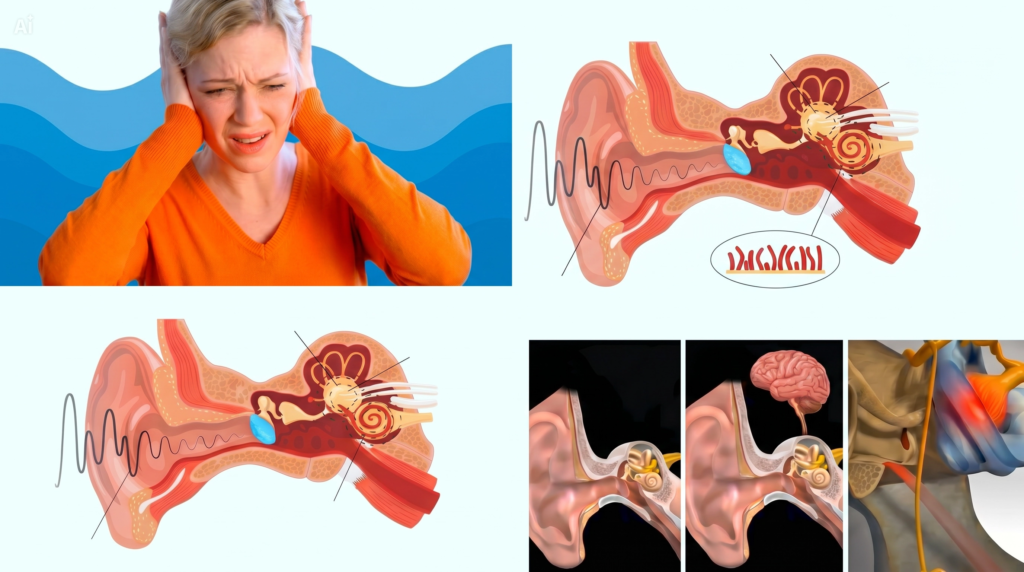
To understand why hearing fades, one must look beyond the ear canal and examine the complex bio-electrical highway of the human nervous system. Sound waves entering the ear are converted into electrical impulses by the cochlea. However, for those impulses to become meaningful sound, they must travel across a series of microscopic gaps known as neural junctions, or synapses.
When these neural wires become damaged, frayed, or starved of essential cellular nutrients, the communication chain breaks down. The brain, suddenly deprived of the clear, continuous auditory data it expects, attempts to compensate. In a desperate bid to locate the missing frequencies, the auditory cortex increases its internal “gain” or electrical sensitivity. This neurological overcompensation is what manifests as tinnitus—a phantom sound generated entirely within the brain’s neural networks, rather than the physical ear.
Historical Precedents: Traditional Longevity Cultures and Auditory Health
This neurological perspective on hearing health is not entirely new; rather, it echoes centuries of traditional health philosophies. Historically, systems such as Traditional Chinese Medicine and traditional Japanese folk medicine rarely viewed ear pathologies as isolated localized issues. Instead, they treated auditory decline as a systemic manifestation of stagnant vital energy and metabolic imbalances affecting the brain and central nervous system.
In specific isolated regions of East Asia, medical historians have long documented unusual pockets of longevity where populations display remarkable sensory sharpness well into their eighties and nineties. Early twentieth-century anthropological studies noted that elderly individuals in these rural communities routinely outperformed their urban Western counterparts in auditory acuity and memory retention tests.
Historical vs. Modern Perspectives on Auditory Decline
+------------------------------------+------------------------------------+
| Traditional Longevity Paradigms    | Conventional Modern Otology        |
+------------------------------------+------------------------------------+
| Sensory decline is systemic        | Treats the ear as an isolated      |
| tied to neural/metabolic vitality. | mechanical audio-receiver.         |
+------------------------------------+------------------------------------+
| Focuses on botanical formulas      | Relies on external amplification   |
| to preserve cellular pathways.      | (hearing aids) to override damage. |
+------------------------------------+------------------------------------+
Rather than attributing this to mere genetics, researchers found a common denominator in their traditional, deeply integrated dietary habits. These cultures heavily relied on traditional botanical preparations and slow-fermented, nutrient-dense foods that we now know are packed with neuroprotective compounds and trace elements essential for supporting synaptic plasticity.
The Role of Fermentation and Botanical Neuroprotection
From a biochemical standpoint, the traditional diets of these high-acuity populations point toward a powerful physiological mechanism: the preservation of mitochondrial health within neural cells. The auditory nerve requires an immense amount of metabolic energy to continuously transmit sound signals. When the mitochondria—the cellular powerhouses—fail due to oxidative stress, systemic inflammation, or nutritional deficiencies, the neural junctions are the first to degrade.
Modern nutritional science is beginning to validate what these ancient regimens achieved empirically. Fermented botanical formulations generate unique bioavailable peptides and organic acids that easily cross the blood-brain barrier. These compounds work to reduce neuroinflammation, stimulate neural repair mechanisms, and shield the delicate auditory wiring from localized oxidative damage.
By prioritizing systemic neural support over localized ear treatments, historical wellness traditions managed to preserve sensory integrity across a lifespan, offering a profound blueprint for modern preventative care.
Re-Engineering Modern Sensory Preservation
The implications of this research are both urgent and clear. As environmental noise pollution rises and modern diets remain depleted of vital neuroprotective elements, auditory decline is occurring at increasingly younger ages. Relying solely on external amplification devices like hearing aids merely masks the symptom; it does nothing to repair the fraying biological wire underneath.
To truly safeguard long-term hearing and mental clarity, modern wellness strategies must shift toward protecting the central nervous system. This involves minimizing systemic inflammation through clean, whole-food nutrition, reducing oxidative stress, and reintroducing the deeply fermented, nutrient-dense botanical elements that sustained human sensory health for generations. The key to vibrant hearing is not hidden inside a mechanical device—it is preserved within the cellular vitality of our neural pathways.